
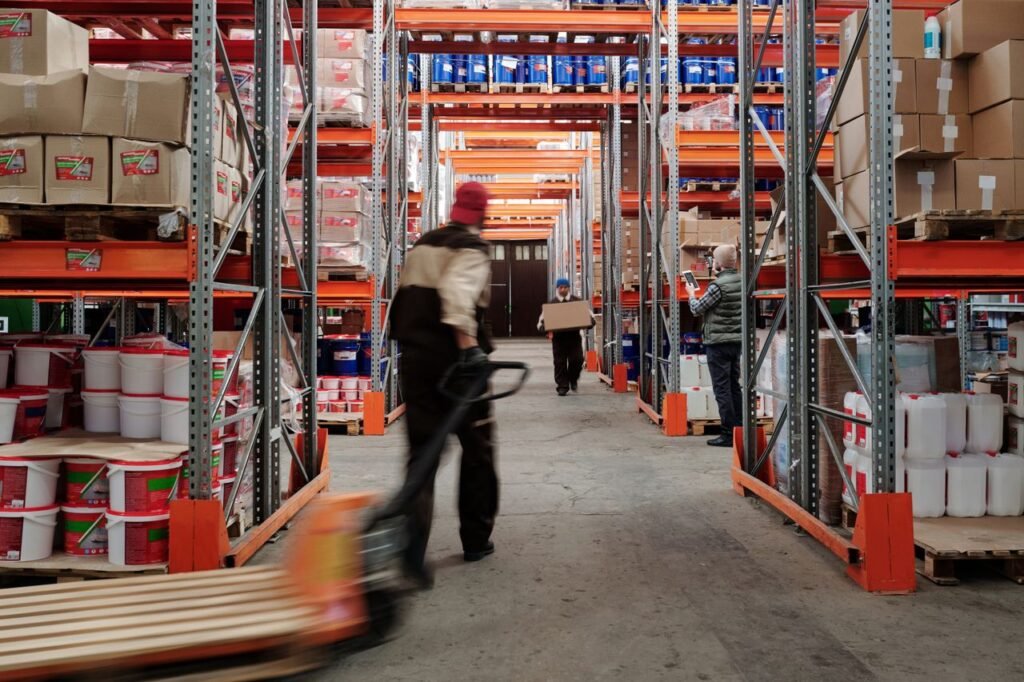
Reshaping Supply Chains: Lessons from Post Pandemic Logistics
This is the story of how organizations large and small reshaped their supply chains after the shock — not as a single grand redesign, but through a series of experiments, conversations, and small bets that added up to a new operating logic.
When a single container failed to arrive on time, it did more than delay a shipment — it changed how an entire team thought about risk. That container belonged to a small manufacturer that made components for household appliances. For months, the factory had run smoothly on a rhythm of just‑in‑time deliveries: parts arrived when needed, inventory sat low, and cash flowed predictably. Then the container was delayed at a distant port, a supplier’s plant closed for weeks, and suddenly the production line stopped. The factory manager remembers the day the line went quiet as a kind of wake‑up call: the invisible threads that had once connected suppliers, carriers, and customers were suddenly visible — and fragile.
Stories like this multiplied during the global disruption that began in the early 2020s. Ports became congested, air freight rates spiked, and consumer demand shifted unpredictably. For many people who had never thought about logistics beyond tracking a package, supply chains became a topic of urgent conversation. For logistics professionals, the pandemic was a stress test that exposed brittle links and forced a rethinking of long‑standing assumptions. The lessons that emerged were practical, human, and often surprising: resilience is not the opposite of efficiency; visibility is a strategic asset; and relationships matter as much as algorithms.
This is the story of how organizations large and small reshaped their supply chains after the shock — not as a single grand redesign, but through a series of experiments, conversations, and small bets that added up to a new operating logic.
The Moment of Reckoning
In the early months of the disruption, many teams found themselves improvising. A procurement lead at a mid‑sized electronics firm described the period as “triage.” Orders were rerouted, alternate suppliers were called, and freight forwarders worked around the clock to find space on ships and planes. The immediate goal was simple: keep production running. But the improvisation revealed deeper vulnerabilities. Single‑source suppliers, long lead times, and tightly optimized inventory policies that had once been praised in boardrooms now looked like single points of failure.
That realization sparked a shift in mindset. Where the dominant logic had been “cost per unit,” a new metric began to matter: “cost of disruption.” Teams started to ask different questions. Instead of only negotiating the lowest price, procurement managers began to evaluate supplier resilience: how diversified were their own supply bases, what contingency plans did they have, and how transparent were they about capacity and constraints? The conversation moved from transactional to relational.
From Just‑in‑Time to Just‑in‑Case — and Back Again
Before the disruption, many organizations had embraced lean inventory models. The logic was compelling: lower inventory reduces carrying costs, frees up capital, and forces suppliers to be responsive. But when supply lines broke, the downside of lean became painfully clear. Some firms responded by stockpiling — buying extra inventory to buffer against future shocks. Others pursued dual sourcing, adding alternate suppliers in different regions to reduce geographic concentration risk.
These moves were not a wholesale rejection of lean principles. Rather, they represented a recalibration. The new approach blended just‑in‑time efficiency with just‑in‑case resilience. For critical components with long lead times or few suppliers, teams built strategic buffers. For commoditized parts with many suppliers, they kept lean inventories. The result was a more nuanced inventory strategy that matched risk profiles to stocking decisions.
A regional retailer that had relied on a single distribution center for a large metropolitan area decided to decentralize. Instead of one massive warehouse, it invested in several smaller micro‑fulfillment centers closer to customers. The change increased operating costs slightly, but it reduced delivery times and made the network more robust to localized disruptions. For that retailer, resilience became a competitive advantage rather than a cost center.
Visibility as a Strategic Asset
One of the most consistent lessons from the disruption was the value of visibility. Teams that had real‑time data on shipments, inventory levels, and supplier capacity were able to respond faster and more effectively. Visibility turned out to be more than a reporting tool; it was a decision‑making platform.
Organizations invested in digital control towers, supplier portals, and end‑to‑end tracking systems. These tools allowed planners to see where delays clustered, to model alternative routes, and to prioritize shipments based on customer impact. A logistics director at a manufacturing firm described the difference as moving from “reactive firefighting” to “informed triage.” With better data, the team could identify which shipments to expedite, which orders to delay, and which customers to notify proactively.
But technology alone was not the silver bullet. Visibility required data standards, supplier cooperation, and a culture of transparency. In many cases, the most valuable information came from conversations — a supplier’s early warning about a capacity crunch, a carrier’s note about port congestion, or a warehouse manager’s observation about labor shortages. Digital tools amplified these signals, but the human relationships were the source.
People, Partnerships, and Local Networks
The pandemic underscored that supply chains are social systems as much as technical ones. Longstanding relationships with suppliers and logistics partners often made the difference between continuity and collapse. Teams that had invested in trust and mutual support found that partners were willing to prioritize their shipments, share scarce capacity, or collaborate on contingency plans.
In several regions, companies formed local supplier networks and micro‑hubs. These networks pooled demand for certain components, enabling smaller suppliers to scale and reducing dependence on distant factories. For a small manufacturer, joining a regional consortium meant access to alternate sources and shared logistics capacity. For the community, it meant jobs and economic resilience.
The human side of supply chains also showed up in workforce practices. Warehouses and distribution centers that had invested in worker safety, training, and engagement were better able to maintain operations during waves of illness and restrictions. Leaders who communicated transparently with frontline teams, provided support for affected workers, and adapted schedules to local realities retained capacity when others struggled.
Rethinking Risk: Geopolitics, Climate, and Health
The post‑pandemic era reframed risk management to include a broader set of threats. Geopolitical tensions, extreme weather events, and public‑health crises all became part of the risk calculus. Organizations began to stress‑test their networks against multiple scenarios: a port closure, a regional lockdown, or a supplier plant affected by flooding.
This broader view led to strategic diversification. Some firms shifted sourcing to multiple countries; others near‑shored production to reduce exposure to long ocean voyages. Near‑shoring did not mean abandoning global suppliers entirely; rather, it created a layered network where local and regional sources provided agility while global suppliers offered scale and cost advantages.
Climate resilience also entered procurement decisions. Buyers began to evaluate suppliers not only on price and quality but also on environmental practices and physical risk exposure. A supplier located in a flood‑prone area, for example, might be deprioritized unless it had robust mitigation measures. Sustainability and resilience started to converge: reducing carbon footprints and reducing vulnerability often aligned.
The Role of Small Experiments
Large, sweeping transformations are tempting to propose, but many organizations found that small experiments produced the most durable change. Teams ran short pilots: testing alternate suppliers for a single product line, trialing a new routing algorithm for a month, or piloting a micro‑fulfillment center in one city. These experiments were designed to be measured and reversible.
One manufacturing group ran a six‑week pilot where it held a modest buffer of critical components and used a digital control tower to reroute shipments dynamically. The pilot revealed that a small increase in inventory, combined with better visibility, dramatically reduced production downtime. The team then scaled the approach selectively to other product lines. This iterative, evidence‑based approach turned uncertainty into manageable learning cycles.
Technology: Tools That Matter (and Those That Don’t)
The post‑pandemic period accelerated investment in certain technologies: cloud‑based planning systems, real‑time tracking, AI‑driven demand forecasting, and automation in warehouses. These tools improved speed and accuracy, but their impact depended on integration and human adoption.
AI forecasting, for instance, offered better short‑term demand predictions when fed high‑quality, timely data. But in volatile periods, human judgment remained essential. Planners who combined algorithmic forecasts with market intelligence — promotional plans, competitor moves, and macroeconomic signals — outperformed those who relied solely on models.
Automation in warehouses improved throughput and reduced reliance on seasonal labor, but it required upfront investment and process redesign. For many firms, the right approach was hybrid: automating repetitive tasks while keeping humans in roles that required flexibility and problem‑solving.
Finance, Contracts, and New Commercial Models
The disruption also changed how organizations thought about contracts and financing. Long, rigid contracts that assumed stable lead times were replaced by more flexible arrangements. Buyers and suppliers negotiated clauses for force majeure, shared contingency plans, and collaborative inventory financing.
Some firms experimented with vendor‑managed inventory or consignment models, where suppliers retained ownership of stock until it was used. These models aligned incentives and reduced the buyer’s capital burden while giving suppliers more visibility into demand. For suppliers, the trade‑off was greater responsibility for inventory management but also closer integration with customers.
Insurance and risk transfer mechanisms evolved too. Companies explored parametric insurance for certain disruptions and used scenario planning to estimate potential financial impacts. Finance teams became active participants in supply‑chain design, balancing resilience investments against return on capital.
Talent and Skills: The Human Infrastructure
Resilient supply chains require people with new skills. Planners needed to be comfortable with digital tools and scenario modeling. Procurement professionals needed negotiation skills that emphasized collaboration and risk sharing. Logistics managers needed to coordinate across regions and time zones.
Organizations invested in training programs, cross‑functional rotations, and talent pipelines. They also recognized the importance of frontline leadership: warehouse supervisors who could adapt schedules, maintain morale, and implement safety protocols were invaluable. The human infrastructure — skills, leadership, and culture — proved as critical as physical infrastructure.
Measuring What Matters
Traditional metrics like inventory turns and on‑time delivery remained important, but post‑pandemic leaders added new measures: time to recover from disruption, supplier risk scores, and the percentage of spend covered by contingency plans. These metrics shifted attention from short‑term efficiency to long‑term resilience.
Data collection and governance became priorities. Accurate, timely data enabled scenario modeling and faster decisions. But leaders also learned to use qualitative signals — supplier conversations, market intelligence, and frontline feedback — to complement quantitative metrics.
The Customer Perspective
Customers noticed the changes too. Some appreciated faster, more reliable delivery from companies that had invested in regional fulfillment. Others valued transparency: firms that proactively communicated delays and offered alternatives retained trust. The pandemic taught many organizations that customer relationships are strengthened by honesty and practical solutions.
For some businesses, resilience became a selling point. A manufacturer that could guarantee continuity for critical components found that customers were willing to pay a premium for reliability. In other cases, resilience investments were framed as part of corporate responsibility — ensuring that essential goods remained available during crises.
Looking Ahead: A Networked, Adaptive Future
The post‑pandemic supply chain is not a single blueprint but a set of design principles: diversify where it matters, invest in visibility, build human relationships, and treat resilience as an ongoing experiment. The future will likely bring more regionalization, smarter use of data, and closer collaboration across ecosystems.
Emerging technologies — better digital twins, more capable AI, and improved connectivity — will reduce friction, but they will not replace the need for human judgment and relationships. The most resilient organizations will be those that combine technical capability with social capital: trusted partners, skilled teams, and a culture of learning.
A Final Story: The Factory That Learned to Dance
Back at the small factory where the missing container once stopped the line, the team made a series of modest changes. They added a small buffer of critical parts, established a second supplier in a neighboring region, and invested in a simple dashboard that showed shipment status in real time. They also formalized weekly calls with key suppliers to share forecasts and early warnings.
Months later, when a regional port experienced delays, the factory did not stop. The dashboard flagged a delayed shipment, the alternate supplier stepped in, and the production schedule adjusted with minimal disruption. The factory manager described the change not as a return to normal but as a new rhythm: “We learned to dance with uncertainty instead of being tripped by it.”
That image — of organizations learning to dance with uncertainty — captures the essence of the post‑pandemic lesson. Supply chains are not static machines to be optimized once and left alone. They are living systems that require attention, relationships, and continuous adaptation. The pandemic made that visible. The work now is to keep learning, experimenting, and designing systems that are efficient, humane, and resilient.
This article draws on widely reported lessons and public analyses of supply‑chain disruptions and recovery strategies. It is written to be practical and human, focusing on the lived experiences of teams and the pragmatic choices that reshaped logistics after the pandemic.
Disclaimer: This article is based on publicly available information and independent analysis. It does not represent the views or endorsement